
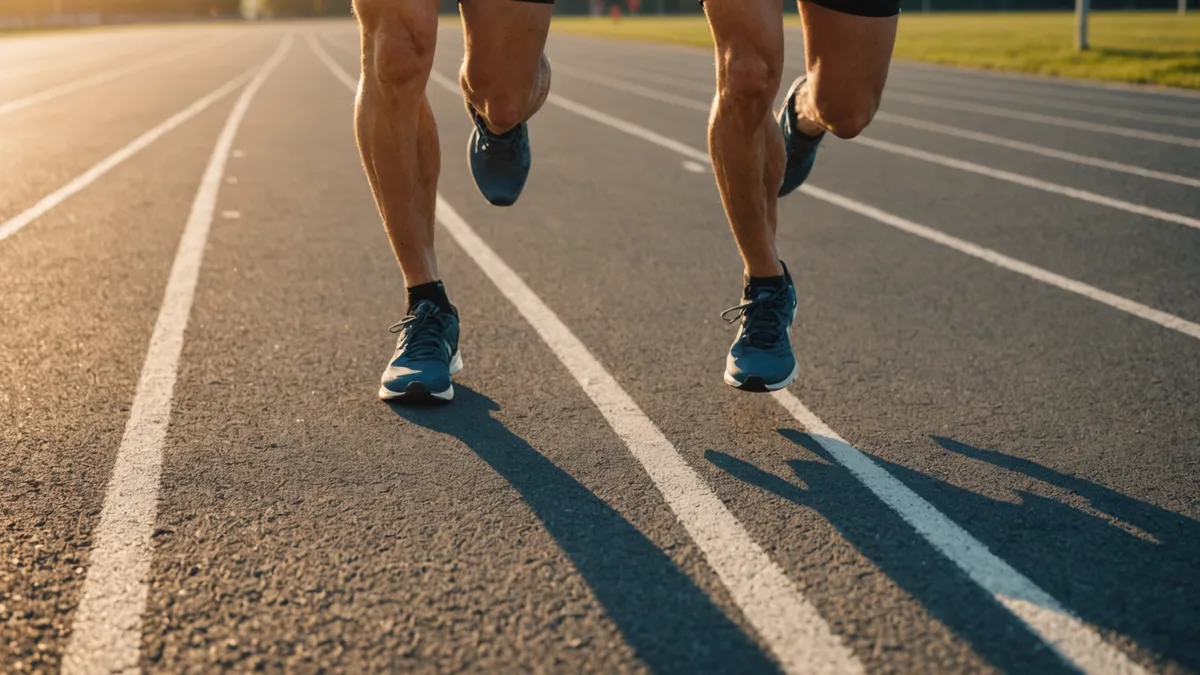
When I made the switch to minimalist running in 2019, I did it badly. I bought a pair of zero-drop shoes, ran my usual Tuesday session in them — about nine kilometers along the river in Chofu — and woke up the following day with Achilles tendons so stiff I could barely descend the stairs from my apartment. I had read about transition protocols. I chose not to follow one because I felt fine during the run. That was a mistake that cost me two weeks of normal training.
This is the guide I would have wanted then. It is written for runners who are currently training in conventional footwear with some heel elevation (anything above 4mm drop) and want to transition to a minimalist or zero-drop shoe without injuring themselves. It is practical and conservative, because the injuries I have seen from rushed transitions are consistently real and consistently preventable.
Why the transition matters at all
The core issue is the Achilles tendon and calf musculature. In a conventional running shoe with 8–12mm of heel elevation, every step you take involves a range of motion at the ankle that is slightly reduced compared to barefoot. Over months and years of training, the tendon and associated soft tissue adapt to this reduced range. The muscle-tendon unit becomes calibrated for a heel-elevated gait.
When you switch to zero drop, that calibration is immediately wrong. Each step now demands a greater range of motion through the ankle — specifically, more dorsiflexion and more eccentric loading of the calf as the heel approaches the ground. The tissues are not prepared for this demand at training volume. The result is typically some combination of Achilles tendon soreness, plantar fascia stress, and calf fatigue that can range from mild and informative to severe and sidelining.
This is not a reason to avoid the transition. The adaptation, once complete, is durable and generally beneficial for running economy and injury resilience over the long term. But the transition itself is a genuine training stress, and it needs to be treated as such — not as a simple equipment change, but as a new training load that requires periodization.
Before you start: the baseline assessment
Before the first run in minimalist footwear, spend a few days walking in the new shoes. Full days, or as close to it as is practical. This is not a warmup ritual — it is genuine tissue preparation. Walking in zero-drop activates the calf and Achilles through the relevant range of motion at low load. It also reveals any immediate biomechanical incompatibilities. If walking in zero-drop produces significant discomfort in the Achilles or plantar fascia within the first two days, that is information worth paying attention to before adding running load.
Also assess your current training volume honestly. A runner averaging 30km per week needs to be more cautious about transition volume than someone running 15km per week, simply because there is more existing load to account for. Higher-volume runners may need to extend the transition timeline beyond the six-week outline below.
Weeks one and two: short, slow, and attentive
In the first two weeks, the new shoes should be worn for only a portion of your runs. A practical approach: complete your session in your conventional shoes, then change into the minimalist shoe for the final 10–15 minutes at easy pace. This keeps total minimalist running time very low — probably 20–30 minutes per week — while still accumulating the specific neuromuscular and connective tissue stress that drives adaptation.
Pace yourself slower than usual in the minimalist portion. Not because you cannot run faster, but because slower running gives you more time to process the proprioceptive information coming from the ground and to adjust gait accordingly. One of the genuine adaptations of minimalist running is an improvement in plantar mechanoreception — the ground-sensing capability of the foot — and that adaptation is partly attention-dependent. Running slowly enough to actually notice what your feet are telling you accelerates the learning.
Monitor the Achilles tendon specifically. Mild fatigue in the calf is expected and fine. Any sharp or persistent soreness at the insertion point of the Achilles — at the back of the heel — is a signal to reduce minimalist volume immediately and take an extra rest day before continuing.
Weeks three and four: building the base
If weeks one and two produced no Achilles issues and only moderate calf soreness that resolves within 48 hours, you can begin running full sessions in the minimalist shoe. Keep the distances shorter than your normal training runs: roughly 60–70% of your usual distances for the first two weeks of full minimalist use.
Pay attention to cadence. Most runners transitioning from conventional shoes discover that their cadence is lower than optimal for minimalist running. A slower cadence tends to produce a longer stride, which in zero-drop footwear means a more pronounced heel-strike and greater braking force than midfoot contact. If you find yourself landing hard on the heel in your minimalist shoe, you are almost certainly overstriding. Shortening the stride and slightly increasing cadence usually corrects this without requiring conscious attention to foot placement.
A useful exercise during this phase: twice per week, do a short barefoot walk — five to ten minutes on a smooth indoor surface or a gentle grass patch if accessible. This is not about barefoot running. It is about letting the foot move through its natural articulation range without any footwear mediation. The feedback this provides helps calibrate how the minimalist shoe should feel in comparison.
Weeks five and six: approaching normal volume
By week five, most runners are ready to approach their pre-transition training volume in the new shoes. I would recommend reaching about 80–90% of previous weekly distance by the end of week six, rather than returning to full volume immediately. The final 10–20% of adaptation is typically where overuse injuries occur — the tissues are mostly adapted but not fully, and the temptation to resume normal training is strong because most sessions feel comfortable.
Long runs deserve particular caution. The connective tissue stress in minimalist running accumulates across duration in a way that shorter runs do not fully reveal. Your first long run in the new shoes should be meaningfully shorter than your previous long-run distance — perhaps 60–70% of it — even if your shorter runs feel completely normal. Allow two weeks between long runs at the new minimum before attempting to extend distance again.
This is also the phase where most runners begin to notice what they have been missing in conventional footwear: a more detailed sense of the ground surface, a natural tendency toward lighter contact, and — if the transition has gone well — a particular ease in the Achilles at midstance that feels like the tendon is doing exactly what it was built to do. That sensation, once familiar, is difficult to give up.
After the transition: maintaining what you have built
The adaptation process does not end at six weeks — it continues for several more months as the foot's intrinsic musculature strengthens, the plantar fascia adapts to changed loading, and the overall biomechanical pattern consolidates. What changes after six weeks is that the acute risk period is over. Running in minimalist shoes no longer feels like a new stress; it simply feels like running.
There are a few maintenance practices worth building into ongoing training. Foot-strengthening exercises — single-leg calf raises, toe-spread work, arch activation drills — support the intrinsic muscles that minimalist running relies on but that take longer than six weeks to fully develop. Short barefoot walks remain useful as calibration tools. And periodic attention to cadence, especially on tired days when stride tends to lengthen, prevents the return of overstriding habits.
I would not say the transition is worth it for every runner. If you have a structural foot condition that requires orthotic support, or if you are returning from a serious Achilles injury, the transition requires more than this guide and should be done under the supervision of a physiotherapist. We are not saying minimalist footwear is the correct choice for every body — we are saying that for the runners it suits, done carefully, the transition yields a quality of movement that is difficult to achieve any other way.
Go slowly. The tissues adapt in weeks. The neuromuscular calibration takes longer. Neither can be hurried, and the attempt to hurry them is where most transitions fail.