
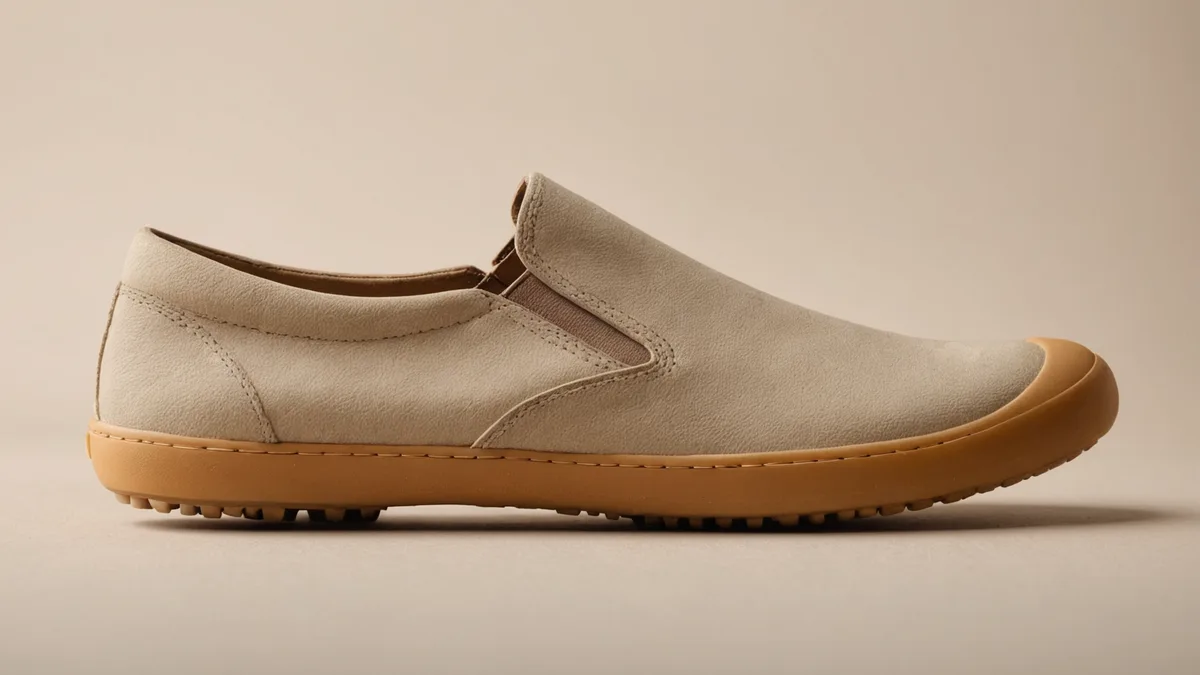
Zero drop is, in description, one of the simplest concepts in footwear design. It means the heel and the forefoot sit at the same height relative to the ground — no elevation, no ramp, no stack differential. In a standard running shoe, the heel is elevated between 8 and 12 millimeters relative to the forefoot. Zero drop removes that elevation entirely.
Simple to describe. Not simple to get right.
I began thinking seriously about zero drop as a design principle in 2021, before NEULO existed, when I was spending time understanding why my own running felt qualitatively different in different shoe types. I founded NEULO in early 2023 with zero drop as a non-negotiable design requirement. The Arc Runner, which finally reached its production form in late 2024, is the result of that two-year effort to produce a zero-drop shoe that works not just during runs but for the full range of activity a runner's day actually includes.
This is an account of why zero drop matters and what the process of getting it right actually involved.
The biomechanical argument
The human foot in its natural state contacts the ground on a level plane. The calcaneus — the heel bone — sits slightly above the forefoot in the skeletal anatomy, but the soft tissue padding of the plantar surface creates a level contact plane during standing and locomotion. A shoe's heel elevation imposes an artificial forward tilt on the entire skeletal stack: ankle, tibia, knee, and through the kinematic chain, the hip and lumbar spine.
At low amounts of elevation — 4mm or less — the effect on gait is small. Most runners would not describe any perceivable difference between 0mm and 4mm drop in normal use. Above 6mm, the effect becomes consistent enough to measure in joint kinematics. At the 8–12mm range that conventional running shoes use, the heel elevation changes ankle dorsiflexion range, alters the Achilles tendon's loading pattern through stance phase, and modifies the demand on the calf musculature in ways that, over time, produce measurable adaptation in the muscle-tendon unit.
This adaptation is not inherently harmful. Millions of people run in elevated-heel shoes without injury. What it does mean is that the foot's intrinsic musculature, the Achilles tendon, and the plantar fascia adapt over time to a reduced range of motion — the range available within the shoe's geometry — rather than the full range they are anatomically capable of. The consequence of this reduced-range adaptation becomes visible when the elevation is removed: stiffness, soreness, and in some cases injury, because the tissue is simply not prepared for the larger range of motion that zero drop demands.
Zero drop does not make the foot "work harder" in any simple sense. It makes the foot work through its full natural range, which is different. For a foot that has never been constrained by heel elevation, zero drop is the neutral condition. For a foot adapted to heel elevation, zero drop is a challenge that requires thoughtful transition.
What I got wrong in the first version
My early design work in 2023 proceeded from a conviction that if the heel-to-toe drop was zero, the shoe was biomechanically correct. I was thinking about the parameter in isolation, without adequate attention to the interaction between drop and everything else.
The first prototype of what became the Arc Runner was zero drop in the sense that the outsole and midsole stack were geometrically level from heel to forefoot. What it was not zero drop in was the experience of wearing it. Because the toe spring — the upward curve of the toe region — was too aggressive, the shoe effectively created a functional drop through a different mechanism: by holding the forefoot elevated relative to the heel through the geometry of the last rather than the geometry of the stack.
This is a known issue in minimalist shoe design and I had read about it, but experiencing it in a shoe I had designed was more instructive than reading about it had been. The foot standing in a shoe with aggressive toe spring is, functionally, in a heel-elevated position even if the outsole measures flat. The load distribution through the plantar surface changes, the calf loading changes, and the proprioceptive experience of standing changes — all in the direction of elevated-heel behavior, despite the zero-drop outsole.
Getting to genuine zero drop required reducing the toe spring significantly from what conventional shoe design defaults to and then managing the resulting visual and structural changes in the last. The toe of the Arc Runner sits much closer to the ground than most shoes. This is why the shoe looks lower-profile at the front than a conventional trainer: it is not a stylistic choice, or not only a stylistic choice. It is what zero drop actually requires when the toe spring is also addressed.
The all-day wear problem
Zero drop for running is, as it turns out, a different problem from zero drop for all-day wear. When running, the foot is in near-continuous dynamic motion — the ankle cycles through dorsiflexion and plantarflexion with every stride, the calf loads and unloads, and the natural compliance of the muscle-tendon system means the Achilles is never statically loaded for extended periods.
During prolonged standing or slow walking, the situation is different. The Achilles is under static load — the weight of the body pulling the heel toward the ground with the calf muscle in sustained eccentric tension. For a foot and tendon adapted to heel elevation, this static zero-drop load can produce calf fatigue and Achilles sensitivity that does not appear during running at all. Several people who tested the Arc Runner in early stages reported that running in it felt excellent but wearing it for a full day of city walking produced Achilles soreness that accumulated over the hours.
This is not a flaw in the zero-drop concept. It is a transition phenomenon — the same kind of adaptation demand that running in zero drop produces, but in a different loading regime. For someone fully adapted to zero drop, all-day wear is not a problem. For someone transitioning from conventional footwear, the all-day wear demand can actually exceed the running demand in terms of cumulative Achilles stress.
We addressed this in two ways. First, we made the fit guide more explicit about transition: the Arc Runner is not a shoe to wear all day from the first day of ownership, and we say so plainly. Second, we optimized the midsole geometry to provide slightly more compliance in the heel region without introducing heel elevation — the goal being to reduce the static load demand while preserving the zero-drop geometry. This is a subtle intervention and I am not certain it changes the transition experience dramatically. What it does is make the shoe more forgiving during the adaptation period without compromising the posture and gait it is designed to support.
Why two years
From the outside, two years to arrive at a zero-drop shoe might seem excessive. The principle is simple; the implementation is a known design domain; there are existing zero-drop shoes in the market to learn from.
The honest answer is that each of those existing shoes was a partial solution to the problem as I understood it, and understanding why they were partial required time spent with them — wearing them, running in them, understanding where their compromises were and why those compromises had been made. Some had addressed the toe spring issue and neglected the all-day wear problem. Some had solved the last geometry and made material choices I disagreed with. Some were correct in their biomechanical approach and visually resolves in a way I found uncomfortable to wear in the specific environments I inhabit.
The design problem is not just: achieve zero drop. It is: achieve zero drop in a shoe that is honest about every other parameter as well — materials, proportions, the visual weight of the object, the feel underfoot at different paces and on different surfaces. Getting all of those right in a coherent product took two years because each element affected the others, and resolving one conflict often exposed another.
I do not think two years is a long time to spend getting something right. I think it is about how long it takes, if you are not willing to release a product until the question it is answering has been answered completely.
What we are not saying
Zero drop is not the right choice for every foot or every runner. People with significant structural differences in the foot, or those recovering from specific injuries, may have genuine clinical reasons to use a heel-elevated shoe under professional guidance. We are not saying otherwise.
What we are saying is that for a healthy foot in a normal running context, the heel elevation built into conventional footwear is an accommodation to a manufacturing and design tradition, not a biomechanical requirement. Removing it, done carefully and with adequate transition time, returns the foot to a loading regime closer to its evolved function. The two years we spent getting it right were spent in service of that return — making sure the shoe was honest enough about zero drop to actually deliver what the concept promises.